Mango, sheesham, teak or walnut? Choosing wood for carved décor
Mango vs sheesham vs teak vs walnut for hand-carved wall art: how each wood carves, looks, ages and copes with humidity — and which to choose.
The wood decides how crisp the carving is, how the finish takes, how heavy the piece is and how it behaves on a humid wall. These are the woods Indian carving workshops use most, and where each one fits.
Mango wood
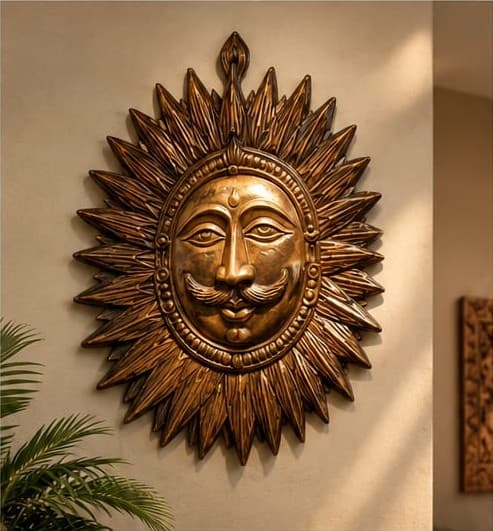
Medium density, fine and even grain, light golden-brown. Mango carves cleanly in both bold and fine relief and takes stains, antique and painted finishes very well. It comes from trees that have stopped fruiting, which makes it an economical and sustainable choice.
- Best for: wall panels, sun motifs, masks, most décor pieces
- Watch for: needs a sealed finish in humid rooms
Sheesham (Indian rosewood)
Dense, strong and naturally oily, with dramatic dark streaks. Sheesham holds fine detail and edges well and resists everyday knocks, which suits furniture-adjacent pieces and busy spaces. It is heavier, so large panels need sturdier mounting.
- Best for: high-traffic areas, consoles, pieces that are handled
- Watch for: weight on large wall pieces; colour varies board to board
Teak
Naturally rich in oils and highly stable, teak resists moisture and insects better than most hardwoods. It costs more and has a straighter grain, so it suits architectural carving such as panels, door surrounds and outdoor-adjacent pieces.
- Best for: humid climates, semi-outdoor and coastal projects
- Watch for: higher cost and longer sourcing time
Walnut and oak
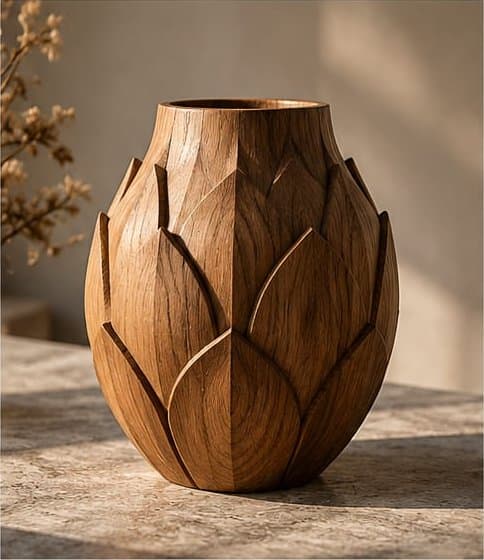
Walnut has a deep chocolate tone and a fine texture for refined, smaller pieces; Kashmiri walnut carving is a tradition in its own right. Oak is pale, hard and open-grained, giving a contemporary look with a visible grain pattern.
Quick comparison
- Crisp fine detail: sheesham, walnut, mango
- Lightest for large wall pieces: mango
- Most moisture-stable: teak
- Darkest natural colour: walnut, sheesham
- Most economical: mango