What is dhokra? India’s lost-wax metal casting, explained
Dhokra is India’s ancient lost-wax metal-casting craft. How a dhokra piece is made, how to recognise genuine dhokra and how to care for it.
Dhokra (also written dokra) is a non-ferrous metal-casting craft made with the lost-wax technique. It is practised by artisan communities across West Bengal, Odisha, Chhattisgarh and Jharkhand, and the method is often linked to the bronze “Dancing Girl” of Mohenjo-daro, cast more than four thousand years ago.
How a dhokra piece is made
- A core is shaped from clay and left to dry.
- The form and its surface pattern are built over the core in wax, often from fine wax threads that give dhokra its characteristic texture.
- The wax model is covered in layers of clay, leaving a channel, and dried.
- The mould is heated: the wax melts and runs out — it is “lost” — leaving a cavity.
- Molten brass is poured in. Once cool, the clay mould is broken away, so no two pieces are identical.
- The casting is cleaned, filed and finished, often with a patina.
How to recognise genuine dhokra
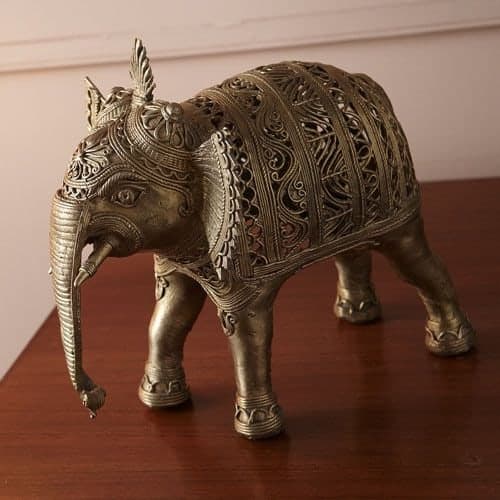
Look for the raised thread-like patterns, slight asymmetry and a surface that is never perfectly smooth. Each figure carries small differences in proportion and texture; identical, polished, mould-sharp copies are usually machine-cast imitations.
Motifs and meaning
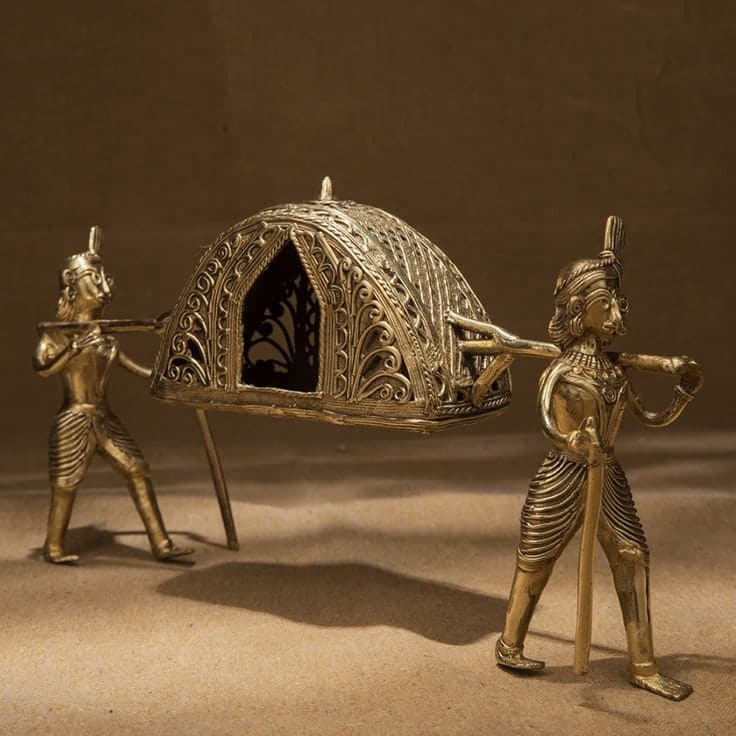
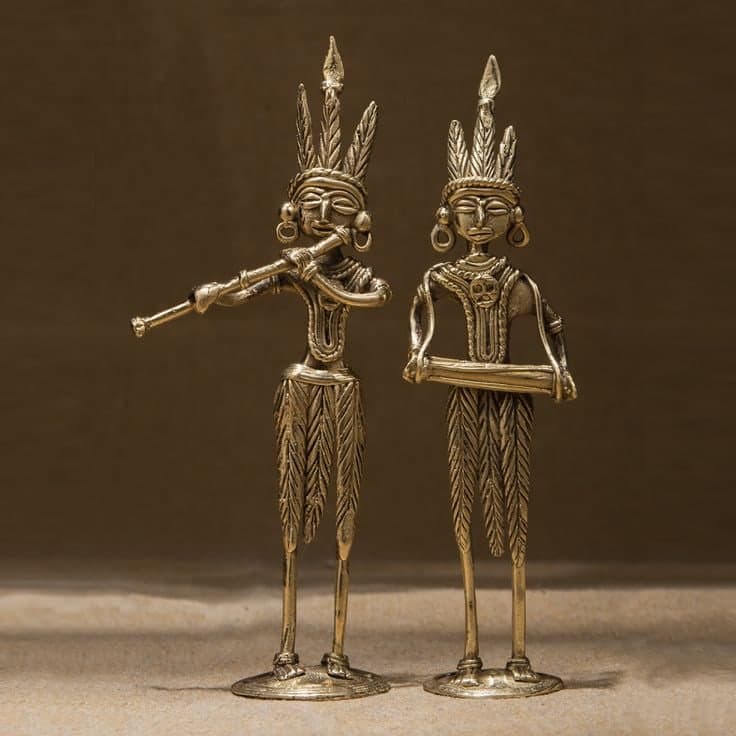
Traditional dhokra shows everyday and ceremonial life: elephants, horses and bulls, musicians and dancers, palanquins, lamps and deities. Elephants are associated with strength and good fortune and are popular for entrances and reception desks.
Caring for dhokra
- Dust with a soft dry brush; the texture traps dust.
- Avoid water and chemical polish, which strip the patina.
- Keep away from damp walls and coastal air, or ask for a lacquered finish.